Comparing Concrete Types for Structural Integrity

Concrete is a fundamental material in construction, valued for its versatility and durability. However, not all concrete is the same. The selection of a specific concrete mix significantly influences the structural integrity of beams, columns, and foundations. This article examines the characteristics of different concrete types, focusing on their compressive strengths and applications. By understanding these variations, engineers and builders can make informed decisions that align with project requirements and performance expectations.
Concrete is composed of cement, aggregates, water, and often supplementary materials or admixtures. The proportions and properties of these components determine the mix’s workability, strength, and long-term behavior. While all concrete serves as a structural material, the intended use dictates the appropriate mix design. For instance, a foundation may require a different mix than a high-rise column due to loading conditions and exposure. This guide provides a comparative overview, highlighting how compressive strength is measured and why it matters for structural elements.
Understanding Compressive Strength
Compressive strength is a primary criterion for evaluating concrete quality. It is defined as the maximum compressive load a concrete specimen can withstand before failure, typically measured in pounds per square inch (psi) or megapascals (MPa). The strength is determined through standardized tests, such as ASTM C39, where cylindrical samples are cured and then compressed until rupture. The results are influenced by several factors, including water-cement ratio, aggregate type, curing conditions, and age. A lower water-cement ratio generally yields higher strength but can reduce workability, necessitating the use of admixtures to maintain placement feasibility.
Concrete strength develops over time, with a significant portion gained in the first 28 days. However, strength continues to increase, albeit at a slower rate, for months or even years. Therefore, specifications often reference the 28-day compressive strength as a benchmark. For structural applications, concrete is categorized into various strength classes, each suited for particular elements. For example, low-strength concrete might suffice for non-load-bearing walls, while high-strength concrete is essential for high-rise columns or pre-stressed beams. Understanding these distinctions is crucial for ensuring that the selected mix meets the demands of its role.
Types of Concrete and Their Applications
Concrete mixes are classified based on their compressive strength and composition. Below are common types used in structural construction, along with typical applications.
- Normal Strength Concrete (2500–5000 psi): This is the most common type, used in residential and commercial buildings, pavements, and foundations. It offers a balance between cost, workability, and strength for general purposes.
- High-Strength Concrete (5000–10000 psi): With higher cement content and lower water-cement ratios, this type is used in high-rise columns, bridges, and heavy-load structures. It provides increased load-bearing capacity and durability.
- High-Performance Concrete (10000+ psi): This type incorporates supplementary cementitious materials and advanced admixtures to achieve exceptional strength and durability. It is employed in specialized structures like skyscrapers, offshore platforms, and reinforced concrete elements under extreme conditions.
Other specialized types include lightweight concrete, which reduces structural dead loads, and fiber-reinforced concrete, which enhances toughness and crack resistance. The choice of type depends on the structural analysis, environmental exposure, and construction constraints. For instance, beams and columns may require high-strength mixes due to high axial loads, while foundations might use normal strength but with considerations for sulfate resistance or permeability.
Beams: Flexural Demands and Mix Selection
Beams are structural members that primarily resist bending moments and shear forces. The concrete in a beam is subjected to compression on the compression face and tension on the tension face, with reinforcement typically provided to handle tensile stresses. The compressive strength of the concrete is crucial in preventing crushing in the compression zone. For beams, the selected concrete mix must also ensure adequate bond with reinforcement and resistance to cracking.
In many cases, normal strength concrete (around 4000 psi) is sufficient for conventional beams. However, for longer spans or higher loads, high-strength concrete may be necessary to reduce member size and self-weight. Additionally, the workability of the mix is critical for proper placement around reinforcement. Self-consolidating concrete (SCC) is sometimes used in congested sections to ensure full encapsulation without honeycombing. The design engineer determines the required compressive strength based on structural analysis and code requirements, such as those from ACI 318.
Columns: Axial Loads and Strength Requirements
Columns are vertical elements that transfer loads from beams and slabs to the foundation. They are primarily subjected to axial compression, making concrete compressive strength a key factor. High-rise buildings often utilize high-strength concrete in columns to support large loads while minimizing column cross-section, thereby maximizing usable floor space. This approach also reduces the amount of steel reinforcement required, leading to cost and material savings.
The mix for columns must meet high strength criteria and also be workable enough to place in sometimes narrow, tall forms. High-strength mixes often use lower water-cement ratios, which can be achieved with the addition of admixtures like superplasticizers. Additionally, columns may be exposed to fire, so the concrete’s ability to maintain integrity under high temperatures is a consideration. In seismic regions, columns require ductility, which is influenced by the concrete’s confinement by reinforcement. Thus, the concrete mix must be selected in tandem with the reinforcement detailing to ensure overall structural performance.
Foundations: Durability and Volume Considerations
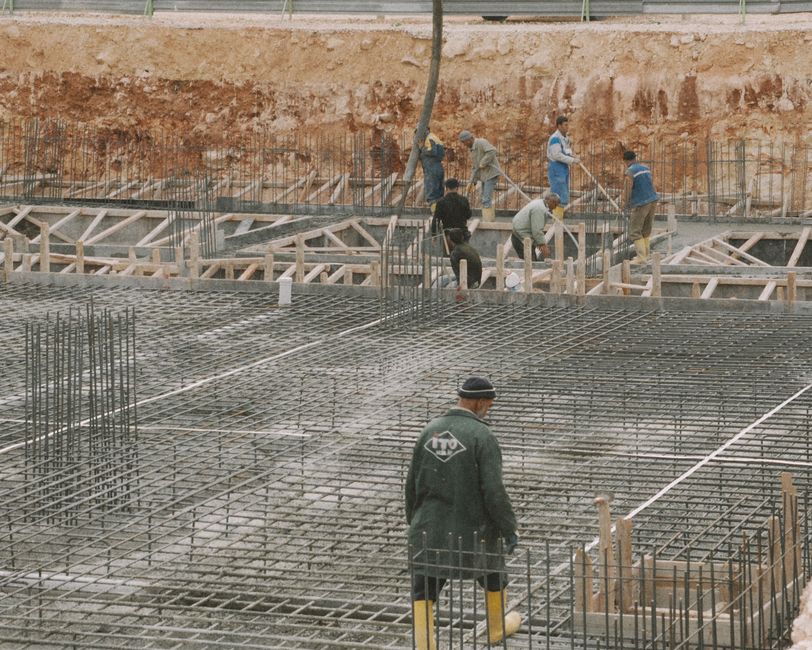
Foundations are the base of a structure, transferring loads to the soil. They must have adequate compressive strength to handle the total weight of the building, but also be durable enough to resist soil moisture, chemicals, and potential ground movement. Foundation concrete often uses normal strength mixes (3000-5000 psi), but the exact strength depends on soil conditions and structural loads.
Large foundation pours, like mat foundations, require a mix with good workability to allow for efficient placement over large areas. In such cases, the concrete’s heat of hydration is a concern, as mass concrete can experience thermal cracking. To mitigate this, mixes using fly ash or slag reduce the heat generation. Furthermore, foundations in aggressive soil environments may require higher cement content or specific admixtures to enhance sulfate resistance. For instance, a foundation in contact with sulfate-rich groundwater would benefit from Type II or Type V cement, which have lower tricalcium aluminate content. These considerations demonstrate that foundation mix selection is not solely about strength but also about durability and long-term performance.
Selecting the Right Concrete Type
Choosing the appropriate concrete type for a structural project involves a thorough analysis of performance needs, cost, and constructability. The primary step is to determine the required compressive strength based on structural loads and applicable codes. This is typically done by the structural engineer. Then, the mix design is developed to achieve that strength while considering other factors such as workability, durability, and placement logistics. Collaboration between the engineer, concrete supplier, and contractor is essential to ensure that the mix is both technically and practically viable.
It is also important to consider the environment in which the concrete will be placed. In cold climates, air-entrained concrete may be necessary to resist freeze-thaw cycles. In hot climates, measures to control setting time may be needed. Moreover, the availability of local materials and batching capabilities can influence the selection. For example, if high-strength aggregates are not locally available, achieving a very high-strength mix may be challenging. Therefore, a holistic approach is required, balancing all these factors to make an informed decision.
The selection of a concrete mix is a process of optimization, where strength, durability, and workability are balanced against project constraints.
Ultimately, the goal is to ensure that the concrete will perform its structural function reliably over the service life of the building. This requires not only selecting the right type but also ensuring proper placement, compaction, and curing. Even the best mix will fail to perform if not handled correctly. Therefore, understanding the properties and proper use of different concrete types is fundamental to achieving structural integrity.